Life on Bonaire
Beyond "Diver's Paradise"
Bonaire is known around the world as “Diver’s Paradise,” but living here is about much more than what’s beneath the water. Residents enjoy a relaxed island lifestyle, a welcoming international community, and the kind of natural beauty that makes everyday life feel a little extraordinary.
If you’re considering a move, understanding what daily life on Bonaire is really like can help you decide whether the island is the right fit.
From culture and cost of living to healthcare, schools, taxes, and starting a business, here’s a closer look at life on Bonaire.
Island Culture & Community
Bonaire’s culture is shaped by a blend of Caribbean traditions, Dutch influence, and a growing international population. Residents come from many different countries, creating a diverse and vibrant community where locals and expats often connect through shared interests and island life.
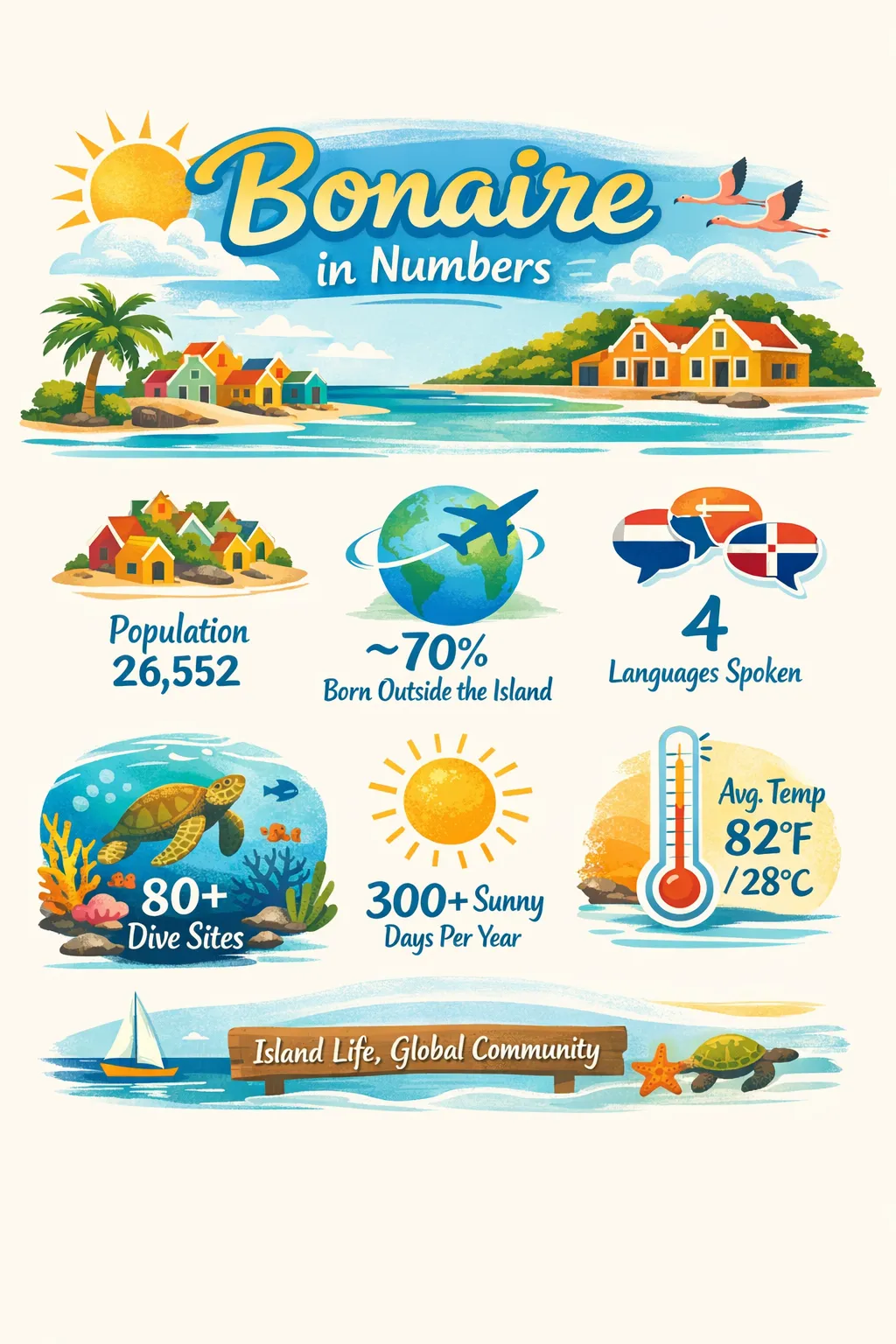
Several languages are commonly spoken on the island. Papiamentu and Dutch are official languages, but English and Spanish are widely used in everyday life, making it relatively easy for newcomers to adapt.
Life here tends to move at a slower pace. People value time outdoors, community gatherings, and enjoying the natural beauty that surrounds the island. From neighborhood barbecues to beach sunsets, daily life often revolves around simple moments and a strong connection to nature.
Bonaire Population Demographics (2025)
26,552 residents (January 1, 2025)
Population grew 6% in one year, mostly due to immigration.
Bonaire has seen rapid growth over the past decade as more people relocate from Europe, Latin America, and other Caribbean islands.
Age Demographics
About 15% of the population is 65+.
The population is gradually aging but remains younger than many Caribbean islands.
Cost of Living on Bonaire
Like many island destinations, the cost of living on Bonaire can be higher than many people expect, mainly because most goods are imported.
However, the overall cost depends heavily on lifestyle, housing choices, and spending habits.
Below are typical monthly expenses that many residents encounter.
Housing
Housing is usually the largest expense when relocating to Bonaire.
Typical monthly rent ranges:
Studio or small apartment: $900 – $1,400
1–2 bedroom apartment or small home: $1,300 – $2,200
Luxury villa or oceanfront home: $3,000+
Property purchase prices vary widely depending on location and property type, with many homes starting around $350,000–$500,000 and luxury properties significantly higher.
Utilities
Electricity is one of the more noticeable costs on Bonaire because air conditioning is commonly used.
Typical monthly utilities:
Electricity: $150 – $200
Water: $50 – $100
Internet: $60 – $100
Utilities can vary depending on home size and energy usage.
Groceries
Since most food is imported, grocery prices on Bonaire are often higher than in mainland countries.
Typical grocery costs:
Single person: $350 – $600 per month
Couple: $600 – $900 per month
Family: $900+ per month
Fresh produce and specialty products may occasionally be limited depending on shipping schedules.
Dining Out
Restaurants range from casual local eateries to upscale waterfront dining.
Typical prices (per person):
Fast-food meal: about $12 – $15
Casual restaurant meal: about $25 – $50
Three-course dinner at oceanside restaurant: around $80 – $150
Transportation
Most residents rely on a car, truck or scooter to get around the island.
Typical monthly costs:
Fuel: $100 – $200 depending on driving
Car insurance: $60 – $120
Car purchase: $8,000 – $25,000+ depending on vehicle
Overall Monthly Budget
While costs vary widely, rough estimates for total monthly living expenses are:
Single person: $2,400 – $3,600 including rent
Couple: $3,500 – $5,000 including rent
Family of four: $6,000+ depending on lifestyle
Healthcare on Bonaire
Bonaire has a modern healthcare system that serves both residents and visitors. While the island is relatively small, healthcare services are well organized and supported through the Dutch public health system.
The main medical facility on the island is Fundashon Mariadal, which operates the hospital, general practitioners, pharmacies, and many specialist services. The hospital is located in Kralendijk and serves the entire island, providing emergency care, primary care physicians, maternity services, diagnostic imaging, and a range of outpatient specialists.
Because Bonaire is part of the Caribbean Netherlands, healthcare for legal residents is covered through a public health insurance system administered by the Dutch government. The program is overseen by the National Office for the Caribbean Netherlands (Zorg en Jeugd Caribisch Nederland – ZJCN), which manages healthcare funding and policy for Bonaire as well as the neighboring islands of St. Eustatius and Saba.
How Healthcare Is Paid For
Healthcare on Bonaire is funded through the Dutch Caribbean public health insurance program, often referred to as the BES health insurance system. Instead of individuals paying private insurance premiums, the system is primarily funded through payroll taxes and contributions from employers and the government.
Employers pay a healthcare contribution for employees, and self-employed residents contribute through their tax obligations. These payments go into a national healthcare fund that covers medical services for residents of Bonaire, St. Eustatius, and Saba.
Because of this system, most basic healthcare services are accessible to residents without the need for separate private insurance policies.
Specialized Care
While Bonaire’s hospital provides a wide range of services, the island’s small size means that some highly specialized treatments may not be available locally. In those cases, patients are typically referred to medical facilities in Curaçao or the European Netherlands.
When specialized treatment is medically necessary, travel and care coordination are often arranged through the healthcare system.
Pharmacies and Everyday Care
Pharmacies are available across the island, and prescription medications are generally covered under the public healthcare program for residents. General practitioners serve as the first point of contact for most medical concerns and can refer patients to specialists when needed.
Healthcare for Visitors
Visitors to Bonaire are not covered by the public healthcare system and should have travel insurance that includes medical coverage. Medical services are available to visitors, but payment is typically required unless covered by an insurance provider.
A Reliable System for Island Living
Although Bonaire is a small island, the healthcare system benefits from the structure and oversight of the Dutch public health system. For residents, this provides access to reliable medical care locally and a coordinated referral network when specialized treatment is required.
Chat w/ a Local Expert
Ready to dig deeper? Schedule a chat with expats & local experts in real estate, immigration, and more!
Raising a Family on Bonaire
Many families choose Bonaire for its safe environment, outdoor lifestyle, and strong sense of community. Children grow up surrounded by nature, with easy access to beaches, marine life, and outdoor activities that encourage exploration and adventure.
At the same time, Bonaire offers structured educational opportunities influenced by the Dutch education system, which is known for its strong academic standards and clear pathways into higher education.
Schools on Bonaire
Bonaire has a mix of local Dutch-system schools and international education options, giving families flexibility depending on their language preferences and long-term plans. Most public schools follow the Dutch educational model, since Bonaire is part of the Caribbean Netherlands.
The Dutch system emphasizes structured learning, strong foundational academics, and preparation for different educational pathways as students grow older.
Children typically attend:
Primary school (Basisonderwijs) from ages 4–12
Secondary school (Voortgezet onderwijs) beginning around age 12
At the secondary level, students may follow different tracks based on academic interests and abilities, similar to the education structure in the Netherlands.
Language of Instruction
Dutch is the primary language of instruction in many schools on Bonaire, particularly within the public education system. However, because the island has a multicultural population, students are often exposed to several languages and many schools incorporate multilingual learning environments. For families who prefer English-language education, there are also international and private school options available on the island.
Pathways to University
Because Bonaire is part of the Netherlands, students who complete the Dutch educational pathway can often transition smoothly into universities in the Netherlands and other European institutions. Many students from Bonaire choose to continue their studies in the Netherlands, where they can access a wide range of universities and academic programs.
A Unique Environment for Growing Up
Beyond academics, many parents appreciate the lifestyle Bonaire offers children. Outdoor activities, marine conservation programs, sports clubs, and community events help young people stay active and engaged. The island’s smaller size can also foster close relationships between families, teachers, and the community.
Accessibility: Flights & Connectivity
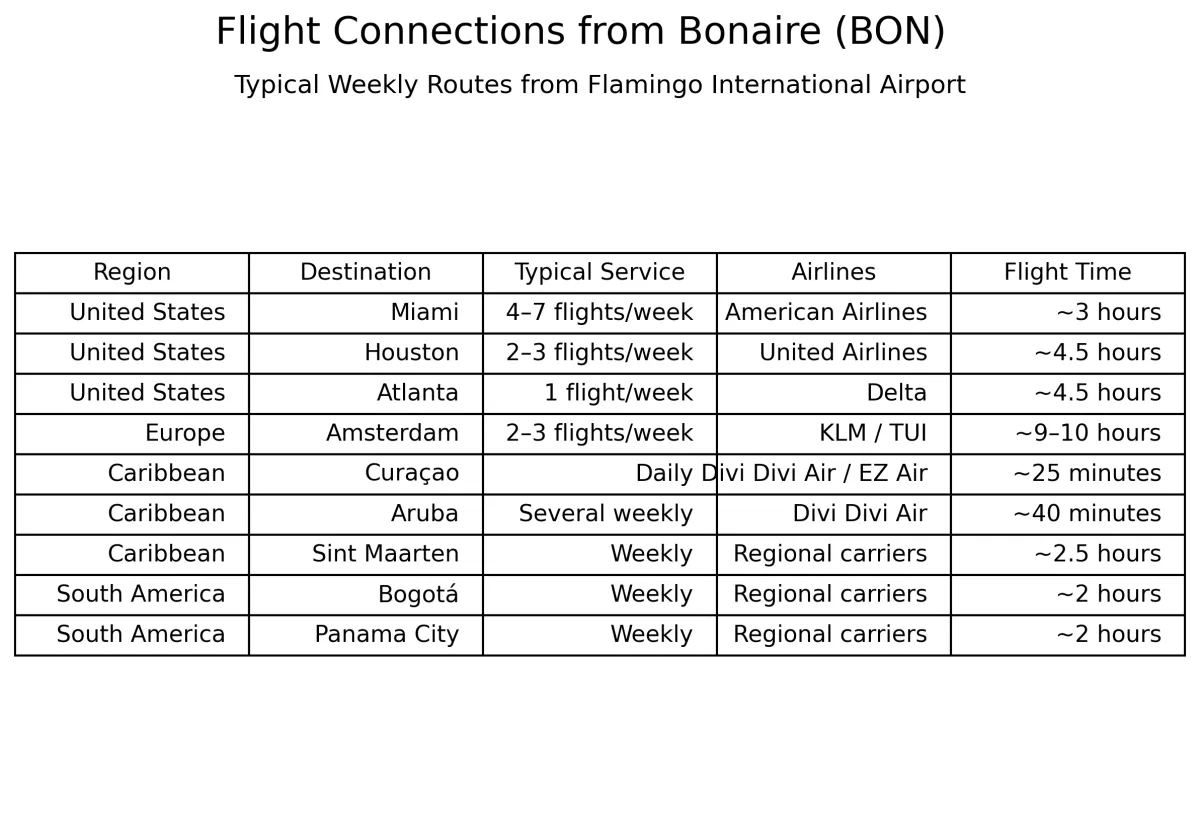
Although Bonaire is a small island, it is well connected to several major travel hubs.
Flamingo International Airport offers direct flights to destinations in the United States, Europe, and nearby Caribbean islands. Regular connections to places like Miami, Houston, Amsterdam, Curaçao, and Aruba make travel relatively convenient for residents and visitors alike.
For those who work remotely or run online businesses, internet connectivity on Bonaire is generally reliable. High-speed internet service is available through local providers, and mobile coverage across the island is strong. Starlink is also accessible on Bonaire.
Many professionals successfully work remotely from Bonaire, combining career flexibility with island living.
Chat w/ a Local Expert
Ready to dig deeper? Schedule a chat with expats & local experts in real estate, immigration, and more!
Buying Property on Bonaire
Foreigners are allowed to purchase property on Bonaire, and many international buyers choose the island for vacation homes, investment properties, or permanent residences.
Buyers can find a variety of property types, including houses, condominiums, oceanfront villas, and undeveloped land. Different neighborhoods offer unique environments, from lively coastal areas to quieter residential communities.
Zoning regulations do prohibit some neighborhoods from renting properties as short-term rentals. So if you are interested in investing in property on Bonaire, it is essential to first connect with a real estate agent who is knowledgeable and up-to-date on zoning restrictions.
The purchasing process typically involves working with a real estate agent, conducting due diligence, and completing the closing through a notary. The process is generally straightforward, though regulations and requirements may vary depending on the type of property.
Because real estate laws and procedures can differ from those in other countries, many buyers benefit from guidance from experienced local professionals.
Work and Starting a Business
Employment opportunities on Bonaire are influenced by the island’s economy, which is closely tied to tourism, hospitality, and local services.
For non-Dutch citizens, working locally may require permits or specific residency arrangements. Many newcomers explore remote work opportunities, allowing them to live on Bonaire while working for companies based elsewhere.
Entrepreneurship is also common on the island. Businesses related to tourism, hospitality, health and wellness, and lifestyle services often attract entrepreneurs looking to combine work with island living.
Starting a business involves registration, licensing, and compliance with local regulations. Working with knowledgeable advisors can help ensure the process goes smoothly.
Taxes on Bonaire
Bonaire is part of the Caribbean Netherlands and uses a tax system that differs from both the European Netherlands and many other Caribbean islands.
Residents may be subject to income tax under the Caribbean Netherlands tax framework, and businesses typically pay various local taxes and fees. Instead of a traditional value-added tax, Bonaire uses a system known as ABB, which functions as a sales tax on goods and services.
Property taxes and other local obligations may also apply depending on residency and property ownership.
Because tax situations vary widely based on citizenship, residency, and income sources, professional guidance is often helpful when planning a move to the island.
Is Bonaire Right for You?
Life on Bonaire offers a unique blend of natural beauty, international culture, and relaxed Caribbean living. For many people, the island provides an opportunity to step away from the rush of modern life and enjoy a more balanced way of living.
If you’re considering a move, learning from people who already live on the island can be incredibly helpful. Local experts, residents, and professionals can offer valuable insights about housing, immigration, business opportunities, and everyday life.
For many future residents, exploring Bonaire firsthand is often the best way to see if the island truly feels like home. Spending time exploring neighborhoods, meeting local professionals, and getting a feel for the community can make the decision much clearer.
→ Learn about our Bonaire Scouting Trips designed for people considering a move.
Chat w/ a Local Expert
Ready to dig deeper? Schedule a chat with expats & local experts in real estate, immigration, and more!
Dream Life Ready: It's Your Move!
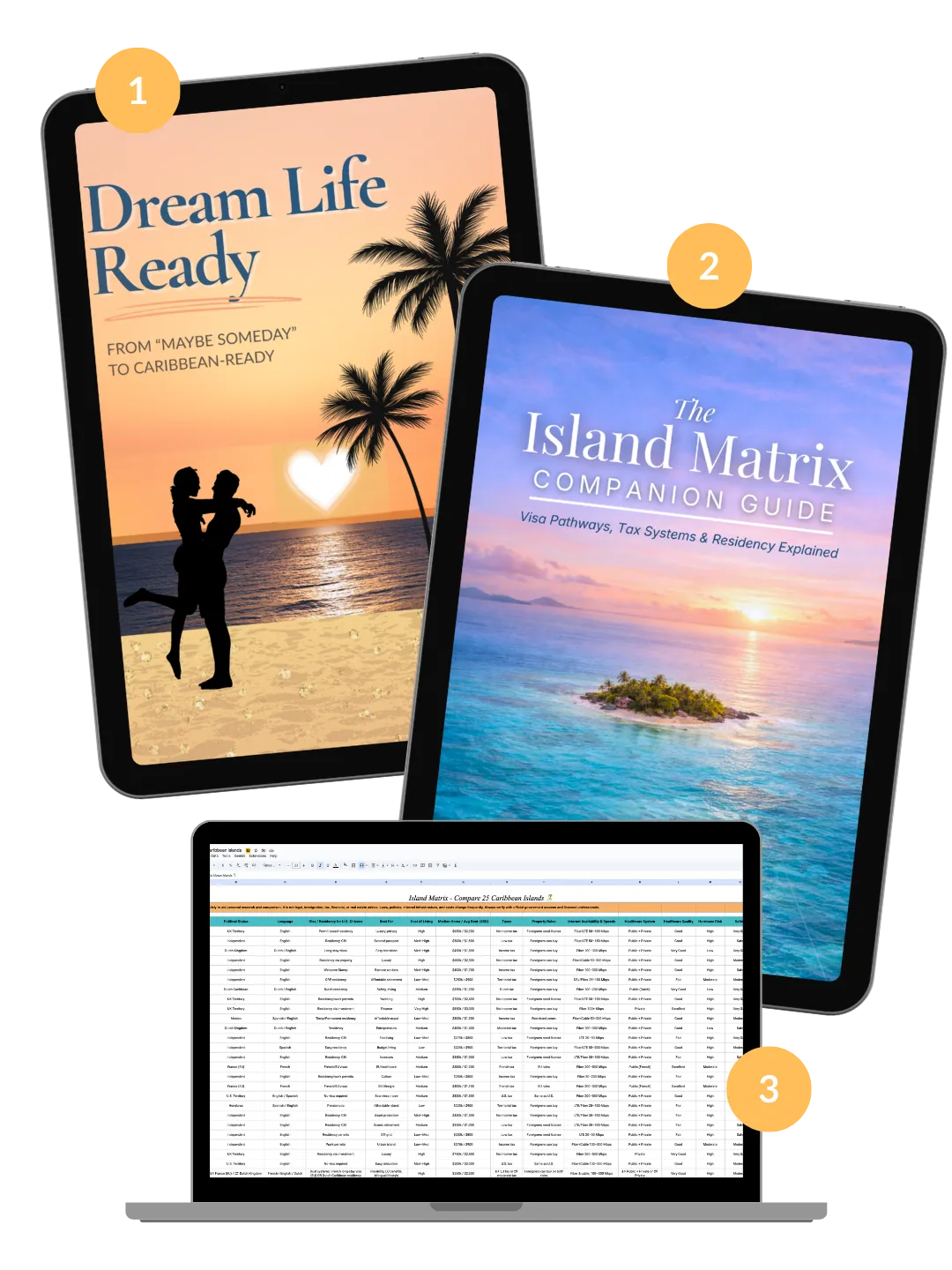
Get the Dream Life Ready starter kit and start planning your move to paradise! Includes a 60 page guidebook and island matrix to compare 25 Caribbean islands side-by-side:

Quick Links
Legal
Legal
Copyright 2026. All Rights Reserved.